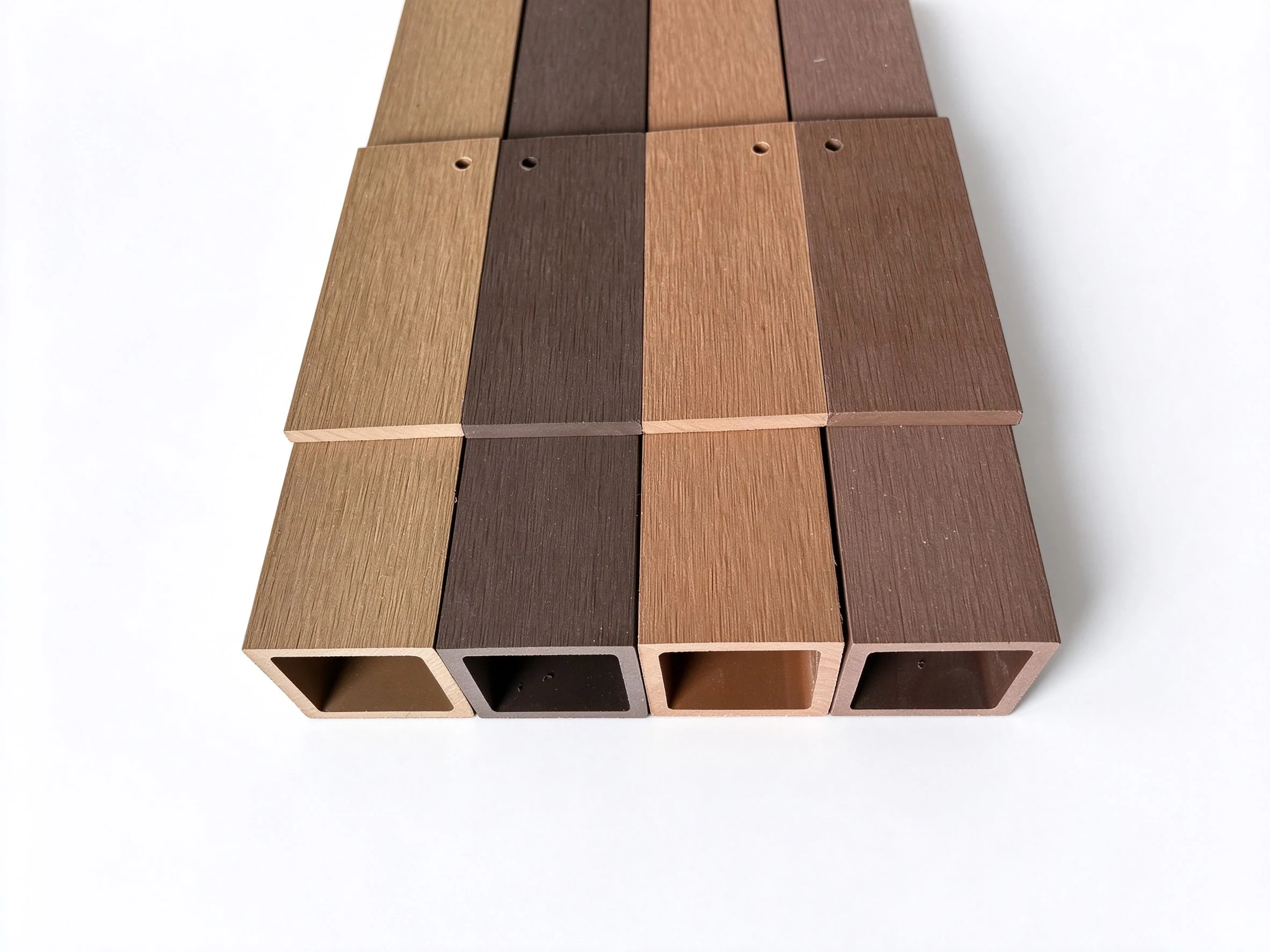
A pergola, gazebo or garden arch needs timber that looks like wood and lasts like an engineered material. That is exactly the trade-off buyers face when comparing WPC timber vs natural timber. For outdoor structures across Europe, the maintenance bill of real wood has become the deciding factor.
The Problem with Natural Timber Outdoors
Real timber is beautiful, but outside it is a slow-moving repair project. The posts at ground level rot first, rain finds every crack, and UV light turns the surface grey. A pergola needs oiling every year, and within 8–10 years the beams are brittle, split and unsafe. Replacing a structural beam on a built pergola is expensive.
What WPC Square Timber Is
WPC square timber blends wood fibre with polymer into solid, dimensionally stable profiles such as 50x50, 90x40 and 100x50 mm. It looks like wood, machines like wood and fixes like wood — but it never rots, never splits and never needs oiling.
First Generation vs Co-Extrusion
First-generation solid WPC timber is a practical, budget-friendly structural choice. The second-generation co-extrusion version adds a 360-degree protective cap that resists UV, scratches and stains — the pick for visible pergolas, fences and premium garden structures.
Best Uses
- Pergola beams and posts
- Trellises and garden arches
- Privacy screens and seating frames
- Garden edging and damp coastal settings
WPC timber works for pergola beams, posts, trellises and arches, privacy screens, seating frames and garden edging. It is especially strong in damp or coastal settings where natural timber fails fastest.
Load and Installation
Solid profiles carry real structural load, and installers can cut, drill and screw them the way they are used to. Pre-drill near ends to avoid splitting, and allow small expansion gaps for temperature changes.
For a maintenance-free pergola that looks like timber, WPC is the modern answer. See our bulk purchase guide and the decking comparison next.
Cost of a Pergola, Over Time
A real-timber pergola looks superb for the first summer. By its third year it needs sanding and oiling, and by its tenth the posts are weakening at the base. WPC pergola members skip all of that: they stay straight, stay stable and never need a coat. The material is slightly more expensive per metre, but there is no maintenance labour for the life of the structure.
Because WPC machines like wood, joiners can cut, notch and drill it the way they are used to. The key difference is to pre-drill near the ends and allow small expansion gaps, so temperature changes never push the joints apart. For covered structures, choose the co-extrusion grade for visible beams, since the protective cap resists UV and rain better than the standard surface. The result is a pergola that looks like warm timber on day one, and still looks like that on day 5,000 — the reason European garden designers now specify WPC as their default structural timber.
Related Products
1st Gen Solid WPC Timber
2nd Gen Co-Extrusion WPC Timber
Related Articles
Bulk WPC Timber Purchase Guide: Grades, MOQ, Shipping
WPC Decking vs Wood Decking: What Spanish Buyers Must Know
Need a Quote for "WPC Timber vs Natural Timber: Pergola Solutions"?
Factory Direct · OEM/ODM Customization · FCL / LCL · At Least 15 Years. Contact us on WhatsApp for an instant quote.